You've probably used .pdf, .docx, and .doc files hundreds of times. But have you ever wondered what actually makes them different? Why does a file that looks perfect as a PDF sometimes look like a mess after you convert it to Word?
The answer lies in how these formats are built. Once you understand the basics, the quirks of document conversion make complete sense — and you'll know exactly how to get clean, reliable results every time.
1. What's Actually Inside a PDF, a DOC, and a DOCX?
These three formats aren't just different containers for the same thing. They're built on completely different ideas.
PDF (Portable Document Format) — Created by Adobe in 1993, a PDF works like a digital print. Every element on the page has exact fixed coordinates: this word goes at position X, this image is exactly here. It looks identical on any screen, any printer, any operating system. That predictability is its strength — but it also means it's not designed to be edited.
DOC — Microsoft Word's original format, used until 2007. It stores everything in a binary file — a sequence of raw bytes that only Microsoft Word truly understands. That's why opening old
.docfiles in non-Microsoft software sometimes produces formatting errors.DOCX — Introduced in 2007 as part of the Open XML standard. Here's something surprising: a
.docxfile is actually a ZIP archive. If you renamed it.zipand opened it, you'd find folders of XML files inside — one for the text content, one for styles, one for images, and so on. This open structure is why modern web tools can read and write DOCX files so much more reliably.
2. Converting from PDF to DOCX: What the Tool Actually Does
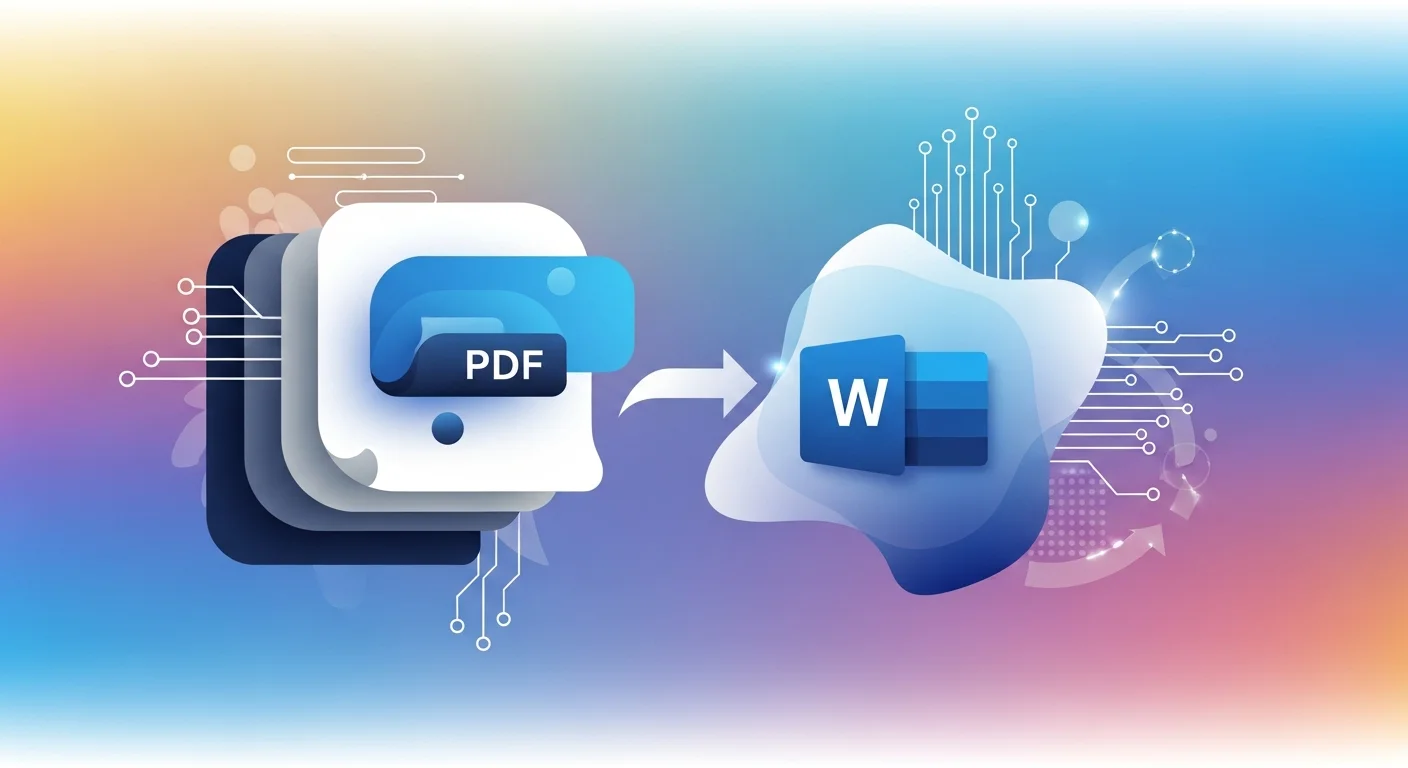
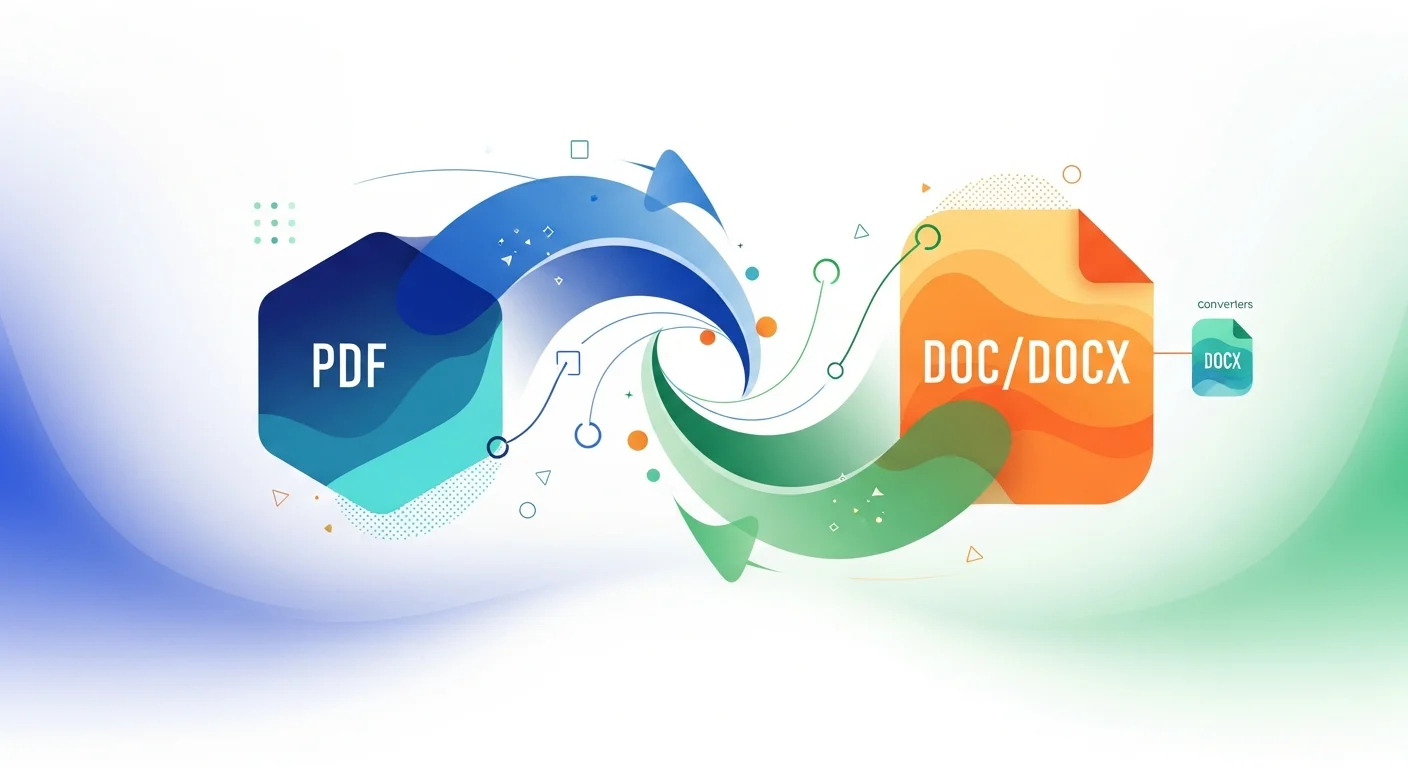
Because DOCX uses XML under the hood, a good converter can map what it finds in a PDF — text positions, font sizes, spacing — into the equivalent XML style rules in a DOCX file. It's translating one language into another.
The results are usually clean for text-heavy documents. Complex layouts with multiple columns, decorative elements, or scanned images are harder — and that's where manual cleanup sometimes comes in.
PDF to Word
Convert PDF documents to editable .docx format instantly and privately.
3. Don't Forget About Hidden Metadata
When you convert a document and share it, you're not just sharing the text people can see. You're also sharing metadata — hidden information embedded in the file.
Metadata can include:
- The original author's name
- When the file was created and last edited
- What software was used
- Sometimes, even deleted text from earlier drafts (in revision history)
Before sending a converted document to a client or publishing it publicly, it's worth checking what metadata is attached to it. You might be unintentionally sharing more than you intended.
PDF Metadata Editor
View and edit PDF title, author, and other hidden metadata instantly and privately.
Privacy and Compliance: Why It Matters Where Your Files Go
Online document converters are incredibly convenient, but most of them work by uploading your file to a remote server. For personal files that's inconvenient. For business or legal documents, it can create real problems.
- EU (GDPR): Business documents often contain personal data — client names, payment details, addresses. Uploading these to a third-party converter without a data processing agreement can be a violation of GDPR.
- US (CCPA): California law requires businesses to disclose what personal information they share with third parties. An online converter that temporarily stores your uploads is arguably a third party.
- India (DPDP Act): Personal data must be processed with appropriate safeguards. Sending documents to unverified external services doesn't meet that standard.
FluxToolkit processes your documents entirely in your browser. No file uploads, no server storage, no third-party exposure.
Frequently Asked Questions
What's the practical difference between DOC and DOCX?
DOC is the older binary format that only Microsoft tools handle reliably. DOCX is an open XML standard that any modern application can read and write — it's smaller, faster, and far less likely to get corrupted.
Why does my converted file look different from the original PDF?
PDFs store exact visual positions rather than structured text. When a converter interprets those positions and maps them to Word paragraphs, alignment can shift — especially in multi-column layouts, tables, or documents with a lot of decorative spacing.
What's in document metadata, and should I be concerned?
Metadata can include the author name, creation date, editing history, and software version. For internal documents it's harmless, but before sharing externally, it's worth reviewing what yours contains.
Does FluxToolkit upload my PDF during conversion?
No. Everything runs locally in your browser. Your PDF is read by the File API on your device and processed entirely in memory — nothing is ever sent to our servers.